





Why foundation starts settling into lines after 40
Three things change, and none of them is your fault. Skin produces less sebum, so there is less natural slip and foundation grips unevenly. Collagen declines by roughly 1% a year from the late 20s, so expression lines no longer close fully between movements and pigment pools where they open. Cell turnover slows, so the surface is fractionally rougher and anything matte or powdered sits on top rather than in.
The fix is not more coverage. It is less of it, placed better, in a formula that keeps moving with the skin and ideally does something useful while it is there.
How we ranked them
Five criteria, in order of weight.
- Does it settle into lines by mid-afternoon. Judged at 3pm, unpowdered.
- SPF. Below SPF 30 is not daily protection. Below SPF 50 is a compromise.
- Skincare actives that appear on the ingredient list, not only on the box.
- Finish and coverage: sheer to medium, satin or luminous, never flat.
- Shade range and price.
We did not score packaging, heritage, or how it photographs under a ring light.
The six, ranked
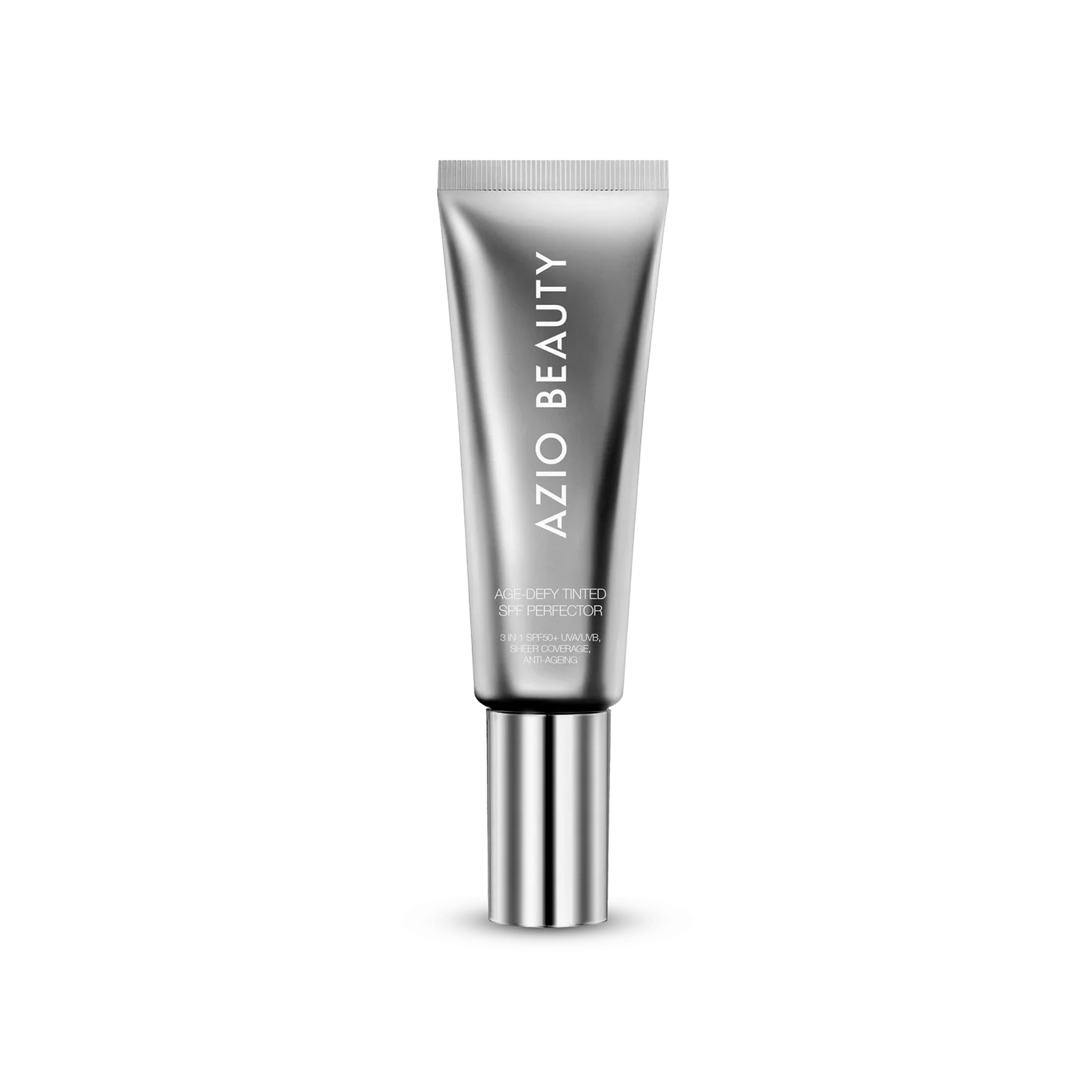
Azio Beauty Age-Defy Tinted SPF Perfector
What it is: a tinted SPF 50+ PA+++ with sheer, buildable coverage and a soft satin finish. 35ml, £27.
Why it won: it is the only formula here that treats the skin while it covers it, and that is the ingredient list talking, not the box. Palmitoyl Pentapeptide-4 (Matrixyl), Copper Tripeptide-1, Niacinamide, Kakadu Plum extract, and three ceramides (NP, NS, EOP) sit under broad-spectrum filters covering UVA, UVB, and HEV light. Those are the actives you would look for in a day cream. Here they come with SPF 50+ and a tint. By 3pm it had softened into the skin rather than settled into it, and it never needed powder, which is most of the reason.
What we'd change: four shades, fair to medium. If your skin is deeper than that, this is not your foundation yet. We would rather say so than pretend otherwise.
Who it's for: anyone who wants one step for protection, coverage, and skincare, and is tired of three.
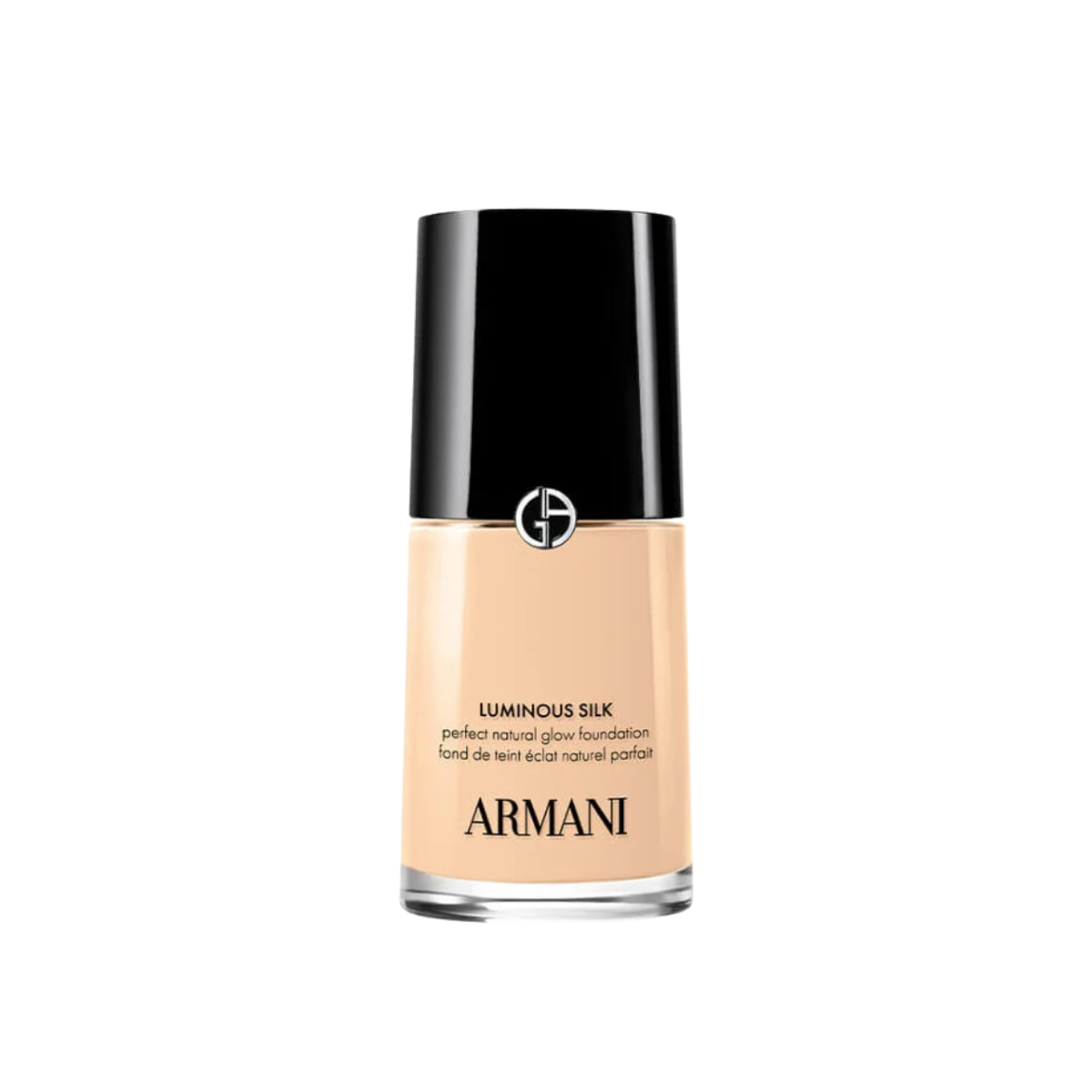
Giorgio Armani Luminous Silk Foundation
What it is: a medium-coverage liquid with a luminous, almost silk-stocking finish, built on a micro-fine pigment suspension that reads as skin rather than paint. Launched in 2000, 40 shades, and still the foundation makeup artists reach for when the brief is "make her look well".
Why it ranks: on skin with texture, light does the work that coverage cannot. Luminous Silk reflects it softly across the whole face rather than from a few shimmer particles, so lines read as shallower without anything being filled. It applies thin, builds in sheer layers without going patchy, and holds a satin surface through the afternoon with nothing more than a touch of powder under the eyes. It is the finish the other five are measured against.
What we'd change: there is no SPF and no active ingredient on the list that will do anything for your skin by Friday. It is makeup, done as well as makeup gets, and it asks you to do the skincare separately. At the price, you are buying a finish, and you should know that is all you are buying.
Who it's for: the reader who already has her SPF and serum sorted and wants the best-looking medium coverage money buys.
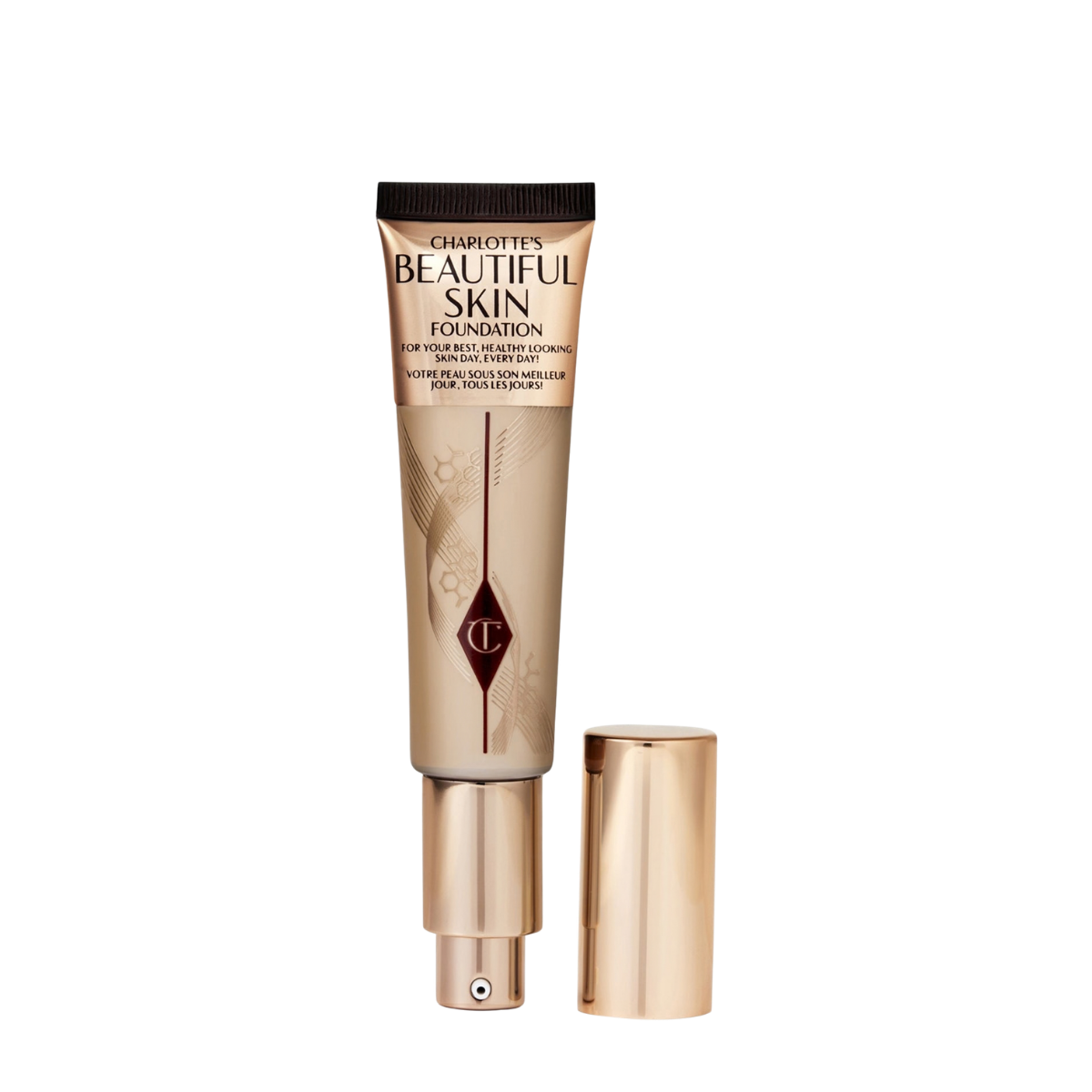
Charlotte Tilbury Beautiful Skin Foundation
What it is: a medium-coverage, dewy-finish foundation that leans on hyaluronic acid and a rose-based hydrating complex to keep the surface supple through the day. 30 shades, SPF 15, and the formula most often named by working makeup artists when asked what they use on clients over 50.
Why it ranks: drier skin is where most foundations fail, because the moment the surface loses water the pigment catches on it. Beautiful Skin keeps the surface hydrated for the length of a working day, so it stays flexible over expression lines and never goes chalky on the cheeks. The coverage is honest medium: enough for pigmentation and redness, not so much that it needs a second product to soften it. It is the best dewy foundation for mature skin in this set, and it is not close.
What we'd change: dew has a cost. On combination skin it reads as shine by mid-afternoon, particularly across the nose, and setting it undoes the point. SPF 15 is better than nothing and worse than enough; wear sunscreen underneath and accept that the finish will shift slightly for it.
Who it's for: dry or dehydrated skin that wants visible coverage and a glow that lasts, and is willing to layer SPF beneath.
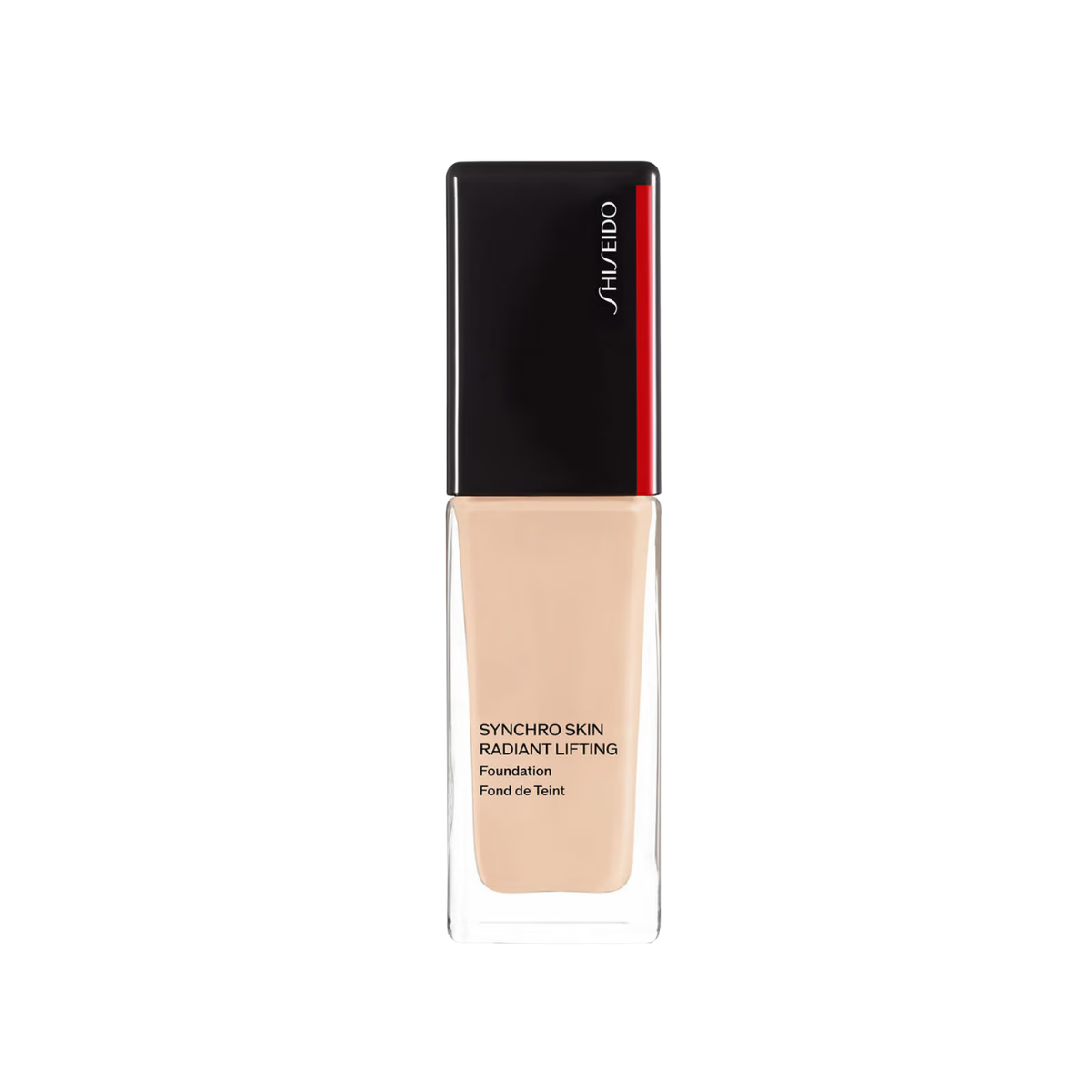
Shiseido Synchro Skin Radiant Lifting Foundation SPF 30
What it is: a light-to-medium liquid with SPF 30 that is designed to respond to the skin through the day, resisting oil where there is some and holding hydration where there is not. The texture is closer to a fluid serum than a foundation, and it has the broadest shade range at this weight, 30 shades across undertones.
Why it ranks: it is the lightest formula here for the coverage it delivers, and lightness is the single most reliable predictor of whether a foundation stays out of lines. It blends in seconds with fingers, never looks like a layer, and the SPF 30 is genuine protection for a day spent mostly indoors. On skin that has started to lose firmness, a formula this fine is kinder than anything that needs to be worked in.
What we'd change: SPF 30 is a step below where daily protection should sit, and "lifting" is the name of a finish, not a description of anything happening to your skin. The skincare content is modest. It looks after your skin for the day; it does not improve it over a month.
Who it's for: anyone who finds most foundations too heavy and wants the lightest real coverage with some protection built in.
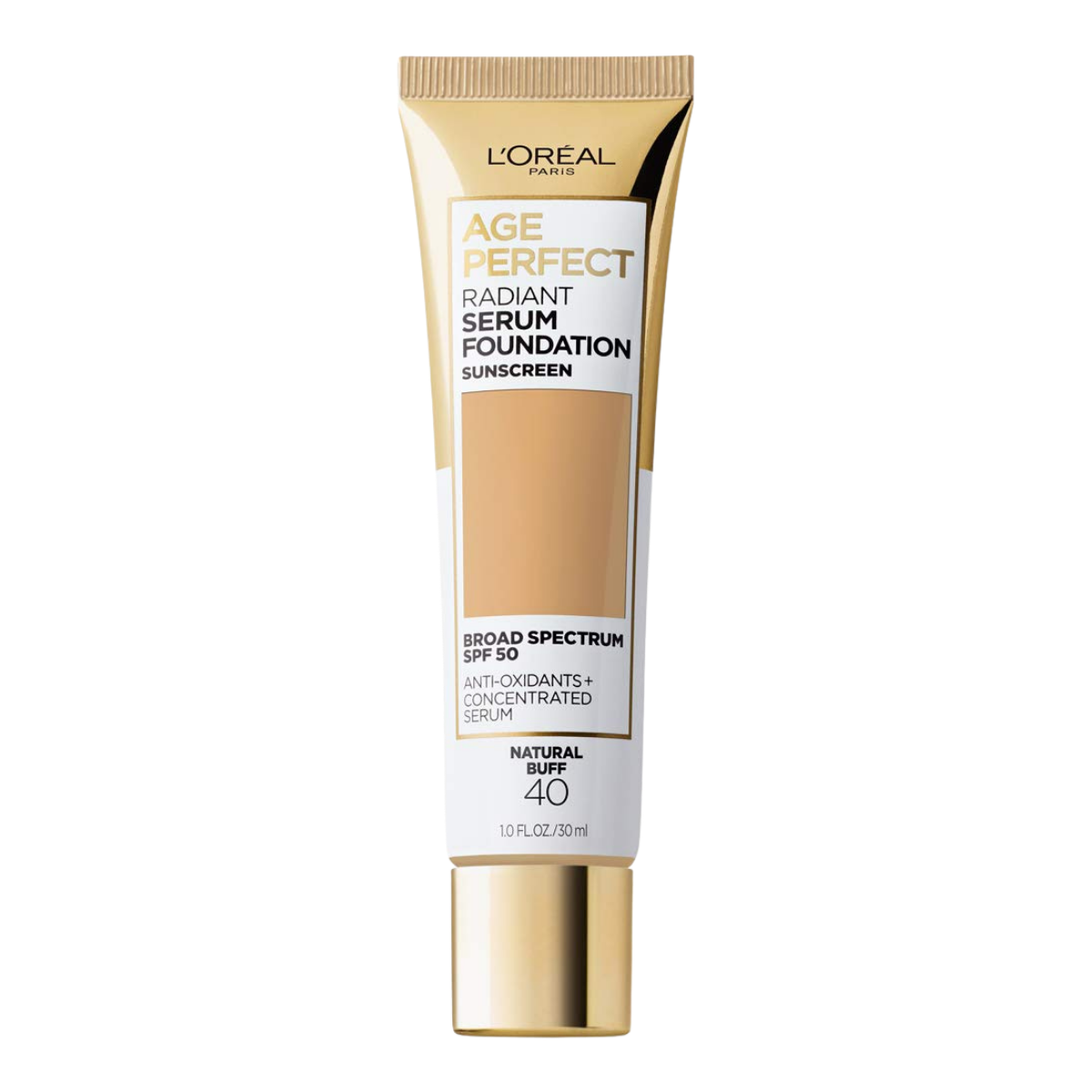
L'Oréal Paris Age Perfect Radiant Serum Foundation SPF 50
What it is: a high-street serum foundation with SPF 50 and a dropper, formulated for skin over 50 with glycerin and niacinamide, in 12 shades. Light-to-medium coverage with a dewy finish and a texture thin enough to pass as skincare on the back of the hand.
Why it ranks: it is the closest thing to the Perfector's brief at a fraction of the price, and SPF 50 on the high street is still rare enough to be worth noting on its own. The serum texture spreads a long way, so a few drops cover the face, and it does not grab on dry patches the way thicker high-street formulas tend to. For the money, it is the most sensible foundation on this list.
What we'd change: the actives are present at levels meant to be mentioned rather than felt, so treat the skincare claims as a courtesy. The finish sits dewy enough that oilier skin will want to set it, and setting is where the lines come back. Twelve shades is thin at the deeper end.
Who it's for: the reader who wants SPF 50 and a light base at a high-street price, and will do the real skincare separately.
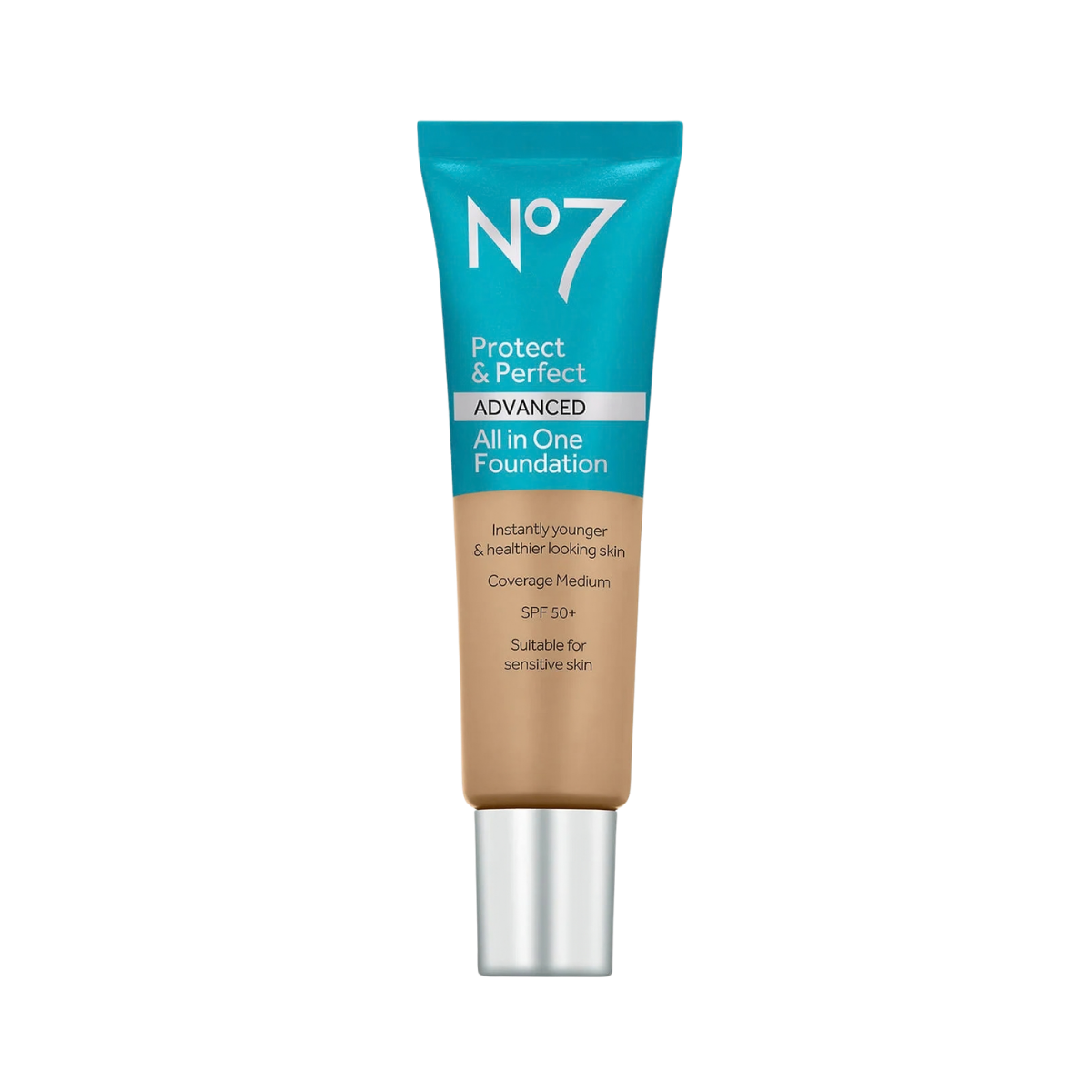
No7 Protect & Perfect Advanced All in One Foundation
What it is: Boots' hybrid foundation, carrying the Matrixyl-based complex from its Protect & Perfect serum range alongside SPF 50 and light-to-medium coverage. 16 shades, a natural finish, and a formula that has been quietly refined over several generations rather than relaunched.
Why it ranks: it is a serious attempt at the hybrid category from a brand that did the clinical work on its peptide before anyone else on the high street, and that counts for something. SPF 50 is correct, the coverage is enough for uneven tone, and it wears evenly on normal skin for a full day without a touch-up. It is the foundation we would hand to someone who wanted to try the skincare-makeup idea without spending to find out.
What we'd change: coverage sits a little heavier than it needs to, and the natural finish tips toward flat by late afternoon on drier skin unless there is a hydrating cream underneath. The peptide is real; its concentration in a foundation is not something No7 publishes, and we would like to see it.
Who it's for: normal to combination skin that wants SPF 50, some skincare intent, and a price that does not need thinking about.
Side by side
Azio Age-Defy Tinted SPF Perfector
Giorgio Armani Luminous Silk
Charlotte Tilbury Beautiful Skin
Shiseido Synchro Skin Radiant Lifting
L'Oréal Age Perfect Radiant Serum
No7 Protect & Perfect All in One
£ high street · ££ mid · £££ luxury
How to apply foundation so it stays out of your lines
The formula is half of it. This is the other half.
- Moisturise 10 minutes before. Foundation on dry skin grips in the lines first and everywhere else second.
- Skip silicone primers. They fill a line, then the foundation sinks into the filled line by lunch. If you want a primer, make it a hydrating one.
- Use less than you think. Start at the centre of the face and blend outward with fingers or a damp sponge. Fingers warm the formula into skin; brushes leave it sitting on top.
- Do not powder the whole face. Press a little under the eyes if you must, and nowhere else.
- Concealer after foundation, only where you need it, pressed rather than dragged. Most people need less of it once the base is right.
Questions people ask
Sheer to medium coverage, a satin or luminous finish, hydration in the formula, and no all-over powder. Of the six here, the Perfector, Luminous Silk, and Beautiful Skin passed cleanest at 3pm. Coverage is the variable that matters most: the more pigment you lay down, the more there is to collect in a line.
Usually it should get lighter again. Skin over 60 produces less oil than skin at 50, and texture is finer, so a tinted SPF or skin tint often does more than a full foundation. The Perfector and the Shiseido are the two we would point to first.
For most days, yes. Coverage you can build beats coverage you have to sheer down, and the best skin tints now carry SPF 50 and real actives. Keep a medium-coverage foundation for the days you want it, and use a tint for the rest.
No brand owns it, and anyone who tells you otherwise is selling you something. What matters is the formula: finish, SPF, and what the ingredient list says. Three of the six above come from brands that make skincare first, and it shows.
In reader polls and editor tests across the UK press, Giorgio Armani Luminous Silk and Charlotte Tilbury Beautiful Skin come up most often. Neither carries daily-grade SPF, which is why neither is first here.
Full-coverage matte foundations, loose powder over the whole face, and anything that promises to erase lines. Lines are not erased. They are lit well, or they are not.
Your skin has already done the work. The right foundation just makes it visible.